How Can I Tell If Coral Beads Are Real? 6 Tests Before You Buy
Picture this: it's the week of your traditional wedding. The aso oke is ready, the gele artist is booked, and a seller is offering you a "genuine coral" set at a price that sounds almost too good. Your auntie is side-eyeing it. Your group chat is divided. And you? You just want to know one thing before you pay: are these beads actually real?
You're not alone in asking — it's one of the most-searched questions about coral beads, and honestly, one of the smartest. Here's the short answer first: real coral beads feel cool to the touch, show natural texture (fine growth lines and tiny pores, never perfectly smooth), vary gently in color from bead to bead, feel heavier than plastic imitations, and cost meaningfully more than fakes. No single home test is proof on its own — but together, these six checks will catch nearly every imitation.

The Six Checks: How to Tell If Coral Beads Are Real
1. The touch test — real coral starts cool. Hold the beads against your cheek or the inside of your wrist. Genuine coral is a natural marine material; it feels noticeably cool at first touch and warms slowly against your skin. Plastic and resin imitations feel room-temperature right away. If a full wedding set feels warm and light and "plasticky" in your hand, trust that feeling.
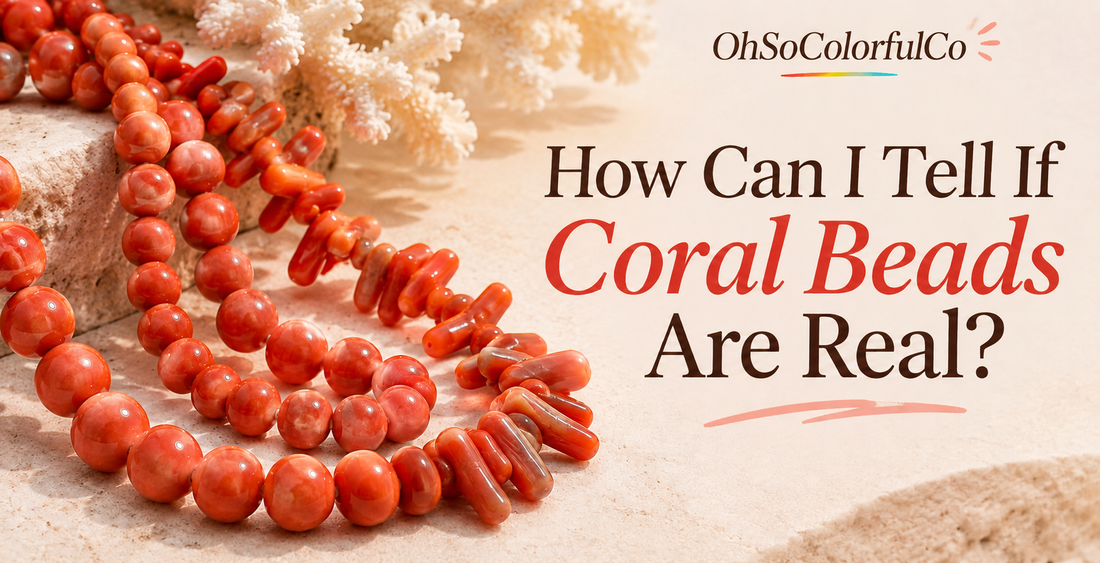
2. Look for growth lines and texture. Real coral grew in the ocean, layer by layer, and it shows: fine parallel growth lines, a slightly wavy, almost wood-grain texture, and tiny pores or pits. Molded imitations are usually too perfect — every bead identical, glossy, and smooth. Nature doesn't do identical. Small imperfections are a good sign, not a flaw.
3. Check the color — and peek inside the drill holes. Natural coral ranges from deep red and oxblood to salmon and pink, with gentle variation from bead to bead. Fakes are often one flat, screaming-red color. And here's a seller-level trick: with dyed beads (a common imitation, often dyed bamboo coral, glass, or resin), the dye pools darker inside the drill holes and cracks, and a scratch can reveal a paler core. Genuine coral is colored all the way through, because the color is the material.
4. The weight test. Real coral has substance. A genuine necklace — like the Amobi men's coral beads necklace — feels satisfyingly heavy in the hand, where a plastic set of the same size feels like a toy. Glass can mimic weight but usually fails the texture and temperature tests.
5. The price reality check. This might be the most honest test of all. Precious red coral is slow-growing and increasingly scarce, and genuine coral is priced like it. If a "100% genuine coral" wedding set costs less than a nice dinner out, it almost certainly isn't genuine coral. A handcrafted traditional coral beads bridal jewelry set lives in a completely different price world from the $15–$25 imitation sets — because the material does.
6. Ask the seller, directly. A reputable seller will tell you exactly what their beads are made of and how to care for them — right in the listing. Vague language ("coral style," "coral look," no material listed at all) is your sign to walk away. And a quick word of fairness: plenty of beautiful traditional pieces are honestly made with dyed bamboo coral. The problem is never the alternative material — it's a seller who won't disclose it.


What Are Real Coral Beads Worth?
Real coral beads are worth anywhere from tens of dollars for a simple bracelet to hundreds or thousands for antique or large precious-coral pieces. What drives the value: the type of coral (deep-red precious coral is the most valuable), bead size and uniformity, color, age, and the craftsmanship of the stringing. A handmade traditional African coral bead bracelet starts around $35, while substantial groom's pieces like the Eze coral beads and the Chima necklace sit in the $110–$120 range — you're paying for the material and the maker's hands.
Why It Matters for a Nigerian Wedding
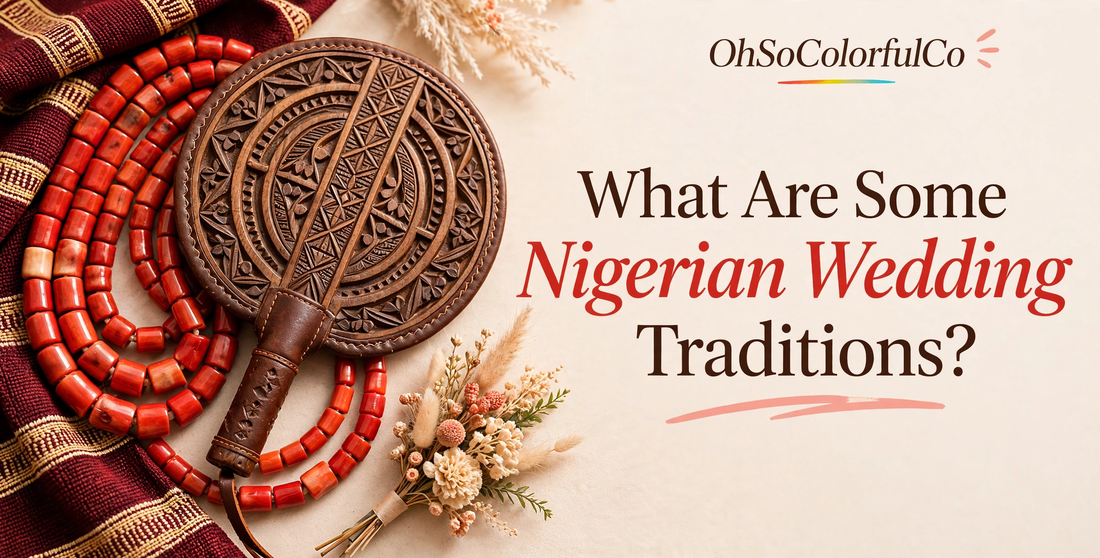
Coral isn't just decoration. In Nigerian culture, coral beads — ileke — carry meanings of royalty, purity, protection, and spiritual significance, which is why families pass them down and why brides and grooms wear them at traditional weddings. If the meaning matters (and for most families, it's the whole point), the material should be real too. Go deeper with us: What do beads mean spiritually in Nigeria?, What is the significance of Nigerian beads?, and our companion guide to the celebration itself, What are some Nigerian wedding traditions? Coral also shows up beyond weddings — see What are African waist beads? for another beloved tradition.

Frequently Asked Questions
How to test for real coral beads?
Start with touch: real coral feels cool against your skin and warms slowly. Then inspect the surface for natural growth lines, tiny pores, and gentle color variation, and check the drill holes for pooled dye, which points to an imitation. Finally, weigh them — real coral feels heavier than plastic — and sanity-check the price against what genuine coral actually costs.
Are coral beads worth anything?
Yes. Genuine coral beads hold real value depending on the coral type, bead size, color, age, and craftsmanship — from traditional pieces around $35–$135 to antique precious-coral jewelry worth far more. Plastic imitations, by contrast, have almost no resale value.
How much are real coral beads worth?
A single handmade traditional piece, like a coral bead bracelet, commonly runs around $35, with full necklaces and wedding sets in the $80–$135+ range, and fine or antique precious coral climbing into the hundreds or thousands. If the price looks like costume jewelry, the beads almost certainly are.
What color coral is most valuable?
Deep, saturated red — often called oxblood — is generally the most valuable coral color, followed by strong red, then salmon and pink shades. A uniform color across a matched set also raises the value.
How much do coral beads cost?
Expect roughly $35 for a bracelet, $80–$135 for a traditional necklace or bridal set from an artisan seller, and significantly more for large, antique, or precious-coral pieces. Prices far below these ranges usually mean dyed or imitation material.
Is coral jewelry illegal to sell?
No — selling coral jewelry is legal in most places, but some coral species are protected and regulated, and the rules vary by country and coral type. That's one more reason to buy from a seller who can tell you what their coral is and where it comes from. (General information, not legal advice.)
What do coral beads mean?
In Nigerian culture, coral beads symbolize royalty, wealth, purity, and status, and they're worn at weddings, chieftaincy ceremonies, and cultural celebrations across Yoruba, Igbo, and Edo tradition.
What is the spiritual meaning of coral beads?
Coral beads are believed to offer protection and to connect the wearer to the spiritual world and to their ancestors. We tell the full story here: What do beads mean spiritually in Nigeria?
The Bottom Line
Run the six checks — touch, texture, color and drill holes, weight, price, and one direct question to your seller — and you'll spot nearly every imitation with confidence. And when you're ready for the real thing, browse our African Coral Beads collection: bridal sets, groom's necklaces, and finishing touches like the African Bridal Coral Hair Vine and the 20-piece bridal hair accessory set — every piece made to be worn with pride and passed down with love.
Once you know the coral is real, the next step is choosing the set itself. Our guide to how to choose a coral beads jewelry set for a Nigerian wedding walks through the five steps — the pieces of a complete set, matching the shade to your outfit, lengths, the groom's coral, and the finishing touches.
With ❤️ & Hues
Christiana@OhSoColorfulCo
Shop the OhSoColorful Co. Collections


What are African waist beads?