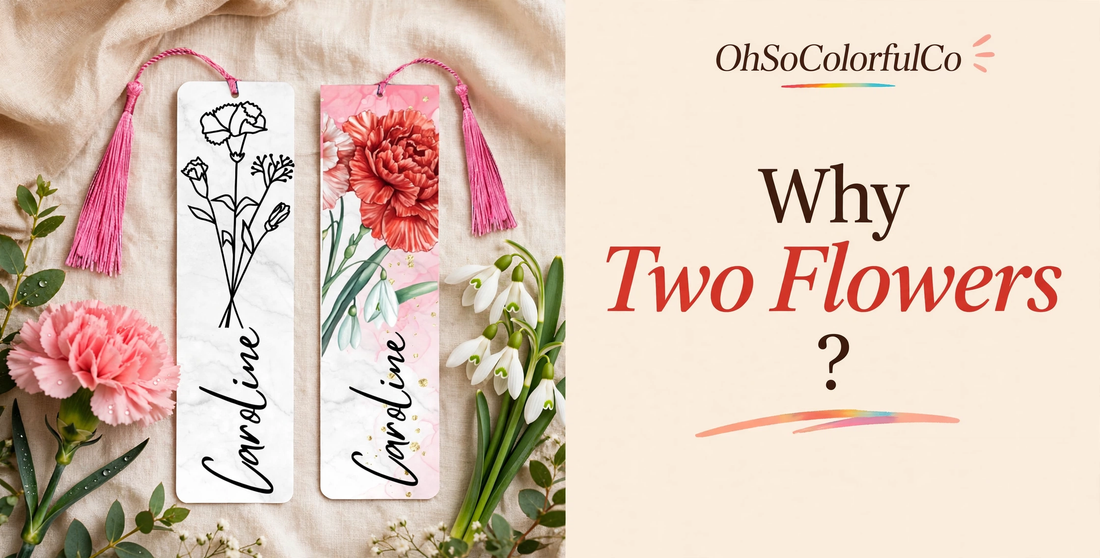




January Birth Flowers: Carnation & Snowdrop — Devotion, and the Flower That Blooms in Snow

January babies, your flowers understood the assignment. January's birth flowers are the carnation and the snowdrop. The carnation — January's primary birth flower — stands for love, fascination, and devotion. The snowdrop, its traditional partner, stands for hope, and it earns that meaning the hard way: it is one of the first flowers to bloom each year, sometimes pushing up through actual snow. So a January birthday carries two messages at once — you are deeply loved and good things are coming. Not a bad way to open a year. Here is the full story on both flowers, what they say about January-born people, and how to turn them into a gift that actually lands. (New to birth flowers entirely? Start with the complete guide to birth month flowers, then come back for January's deep dive.)
Why Does January Have Two Birth Flowers?
January has two birth flowers because different traditions kept different lists. Older traditional lists, modern American florist lists, and Victorian flower-language charts don't always agree, so most months ended up with a primary flower and a beloved partner — for January, the carnation leads and the snowdrop stands beside it. Neither is a mistake, and neither cancels the other out. The full story of how the lists split lives in why are there two birth flowers for each month — for January, what matters is that the pairing works: devotion plus hope is a complete sentence.

The Carnation: Love, Fascination, and Devotion
The carnation is one of the oldest cultivated flowers in the world, grown for more than 2,000 years and woven through Greek and Roman ceremony. One story behind the name traces it to "coronation," for the floral crowns it starred in; another links it to the Latin caro, flesh, for its original pink tone. Either way, the meaning that stuck is devotion — the carnation is the flower you give when the feeling is serious and staying.
Color is where the carnation gets specific, because each shade says something different:
- Red carnations mean deep love and admiration — the full-heart statement.
- Pink carnations mean gratitude and a mother's love. (Pink is also the color of the original Mother's Day flower: Anna Jarvis, who founded the holiday, chose white carnations — and pink became the shade for celebrating mothers who are still with us.)
- White carnations mean pure love and good luck.
- Purple carnations mean capriciousness — affection with a wink, for your most unpredictable favorite person.
- Yellow carnations carried a colder Victorian meaning (disappointment), though today they're mostly read as cheerful — know your audience before you send these.
- Striped carnations traditionally mean a gentle refusal — a pretty flower saying "I can't," which is honestly a life skill.
One more practical devotion: carnations are famously long-lasting in a vase. This is not a flower that loves you for a weekend. It shows up and keeps showing up — which is exactly the energy January people are known for.
The Snowdrop: The Flower That Blooms in Snow
The snowdrop is January's quiet miracle. Its Latin name, Galanthus, means "milk flower," and it is among the very first bulbs to bloom each year — often in the coldest weeks, nodding white through frost and, yes, straight through snow. That timing is the whole meaning: hope, new beginnings, and consolation — proof, in flower form, that winter does not get the last word.
Folklore loves it too. In one old legend, an angel turned falling snowflakes into snowdrops as a sign of hope that spring would return. Victorian households were more divided — some considered a single snowdrop brought indoors unlucky — but the hopeful reading won, and it's the one January keeps. If the carnation is devotion spoken out loud, the snowdrop is hope whispered at exactly the moment it's needed most.
What January's Flowers Say About January-Born People
Read this part the way it's meant — as symbolism, not science. But as symbolism goes, January's pairing is a portrait: devotion from the carnation, hope from the snowdrop. January-born people get described, again and again, as the steady ones — ambitious, loyal, practical, determined (our January journal prints those exact four words on its cover, because they kept proving true). They're the friend who remembers, the planner who finishes, the one who blooms early and doesn't make a fuss about the weather. If that sounds like your January person, she will feel very seen by a gift that says it back to her.
January Birth Flowers and the Zodiac
January spans two zodiac signs: Capricorn (December 22 – January 19) and Aquarius (January 20 – February 18). Birth flowers follow the month rather than the sign, so both Capricorns and Aquarians born in January share the same pair — the carnation and the snowdrop. Capricorn's birth flower is most often listed as the carnation, which fits the sign's reputation for loyalty and quiet determination; late-January Aquarians get the same flowers with the snowdrop's hopeful, first-of-the-year energy turned up.
January Birth Flower Tattoos: What They Mean
A January birth flower tattoo usually carries the flower's meaning, worn permanently: a carnation tattoo stands for love, devotion, and remembrance — it's a popular choice for honoring a mother or a lifelong love — while a snowdrop tattoo stands for hope, resilience, and a new chapter begun in hard conditions. Both flowers suit fine-line work beautifully: the carnation's ruffled petals and the snowdrop's single hanging bell are small designs with a lot of sentence in them.
Not ready to commit your skin? Fair. The same flowers can live on something she uses every day instead — which is the entire idea behind the Birth Month Flower Keepsake Collection.
Which January Birth Flower Is "Really" Yours?
There is no single official list, so there is no single "true" flower for January — anyone who tells you otherwise is selling certainty, not facts. The traditional list used here (the Old Farmer's Almanac list, the one most gift charts follow) names the carnation as January's primary birth flower and the snowdrop as its traditional second. The honest way to choose is by meaning: devotion and love point to the carnation; hope and fresh starts point to the snowdrop. Most January people, sensibly, claim both.

Personalized Gift Ideas for a January Birthday
Fresh carnations last a couple of weeks. Her flowers on something she uses last for years. Every design in the Keepsake Collection comes in a January variant — carnation artwork, her name, and the meaning built in — so pick by relationship:

- For Mom: the Radiant Reflections birth flower journal in January's carnation and snowdrop design. Devotion, in object form — and if she journals, journaling is genuinely good for her mental health, so the gift keeps giving.
- For your book-loving best friend: the Bloom Between the Pages bookmark in Jan-Carnation. Small, personal, and exactly right for the reader who has everything — a strategy that also anchors what to get a book lover who has everything and the book lover gifts under $25 list.
- For your partner: a January tumbler she'll carry daily — the Sips of Nature birth flower tumbler or the Petals & Sips skinny tumbler, both in the Jan-Carnation design. Devotion she can hydrate with.
- For a teacher or coworker: the Blossom on the Go tote with her January flowers — thoughtful without being overly personal, and useful every single school or work day.
- For the traveler starting a big year: the birth flower passport cover and luggage tag set in January's design — hope, packed and ready to board.
Whichever you choose, add the one sentence that makes it land: "Your birth flowers are the carnation and the snowdrop — devotion and hope. Seemed like you." That sentence is the real gift; everything else is the (very pretty) delivery system. For the giftee who defeats every list, see gift ideas for the woman who has everything.

Frequently Asked Questions
What are January's birth flowers?
January's birth flowers are the carnation and the snowdrop. The carnation is the primary flower, symbolizing love, fascination, and devotion; the snowdrop is the traditional second, symbolizing hope and new beginnings.
Why does January have two birth flowers?
January has two birth flowers because traditional lists, modern florist lists, and Victorian flower-language charts never fully agreed — where they split, both flowers stayed on the calendar. The carnation and the snowdrop are January's surviving pair.
What is the true flower for January?
There is no single official "true" flower for January, because no one authority owns the list. On the traditional list most charts follow, the carnation is January's primary birth flower, with the snowdrop as its traditional partner.
What do January's birth flowers symbolize?
Together, January's birth flowers symbolize love, fascination, devotion, and hope. The carnation carries the love and devotion; the snowdrop — one of the first flowers to bloom, sometimes through snow — carries the hope.
What is Capricorn's birth flower?
Capricorn's birth flower is the carnation, shared with the snowdrop, because birth flowers follow the birth month and Capricorn covers most of January (December 22 – January 19). Late-January Aquarians share the same two flowers.
What does a January birth flower tattoo mean?
A January birth flower tattoo means whatever its flower means: a carnation tattoo stands for love, devotion, and remembrance, while a snowdrop tattoo stands for hope, resilience, and a new beginning. Both are popular fine-line designs.
What is a good personalized gift for a January birthday?
A good personalized gift for a January birthday puts her carnation or snowdrop on something she'll use — a name-personalized journal, bookmark, tumbler, or tote from the Birth Month Flower Keepsake Collection — with a card that names the flower and its meaning.
---
Two flowers, one birthday: devotion from the carnation, hope from the snowdrop. Pick the message that sounds like her, put it on something she'll use, and say why in the card.
With ❤️ & Hues
Christiana@OhSoColorfulCo
Shop the OhSoColorful Co. Collections